Mass Tourism and Urban Sustainability
This article was written by Anna Garriga
Anna Garriga
Anna Garriga holds a PhD in Economics and Business from the University of Barcelona and is an expert in tourism economics. Her research in this field has been published in leading international journals such as Tourism Economics and Tourism Management, establishing her as an authoritative voice in the economic analysis of the tourism sector.
The debate on sustainable development must always be present in the economic world. It is the current debate in the city of Barcelona, where mass tourism calls into question urban sustainability. Allow me to start from a global perspective before analyzing the specific case of tourism in Barcelona and Catalonia.
Are there limits to growth?
This is a fashionable question, but it is not new in economics. In 1972, Meadows, and Randers published the book The Limits to Growth (1), presenting the results of simulations of economic growth based on the relationship between population growth and the use of the planet’s finite resources. This publication became a warning signal about the future of the world, as some predictions were devastating. Ultimately, it questioned the prevailing economic growth model, introducing the importance of equity and wealth distribution into the debate. Twenty years later, in 1992, the same authors published Beyond the Limits: Confronting Global Collapse, Envisioning a Sustainable Future (2), which advanced simulations incorporating the fact that new technologies can contribute to sustainability. More than 50 years have passed since 1972, and that warning signal about the growth model remains valid.
Ultimately, it questioned the prevailing economic growth model, introducing the importance of equity and wealth distribution into the debate.
Currently, some advocate for economic degrowth. These positions are made from a place of abundance and without considering the unequal distribution of wealth in the world and within countries. While there is poverty and misery in the world, can we deny the need for economic growth? From my point of view, the question is not whether we should grow or not, but how we should grow, how we should redistribute wealth to achieve economic, social, and environmental sustainability. This involves questioning whether the current economic model is sustainable.
Catalonia has always been an eminently industrial economy. If we recall the 1990s, there was a social crusade against industry, alleging that it polluted rivers, aquifers, and the atmosphere. Certainly, that persistent and generally well-founded social claim led to the deployment of a series of regulations and quality seals that industry now complies with, although there is still room for improvement. Now, Europe is committed to a green industry and leads the world in renewable energy, thus moving toward a sustainable industry.
Is there too much tourism in Catalonia?
If we read some media or listen to certain political leaders, it seems so. There is persistent talk of tourism in the sense that there is an excess, and politically, new restrictive measures are being designed. The term "tourismphobia" has also become popular to express the discomfort of residents in the face of the massive presence of tourists in their neighborhoods. These are warning signs that have been observed for years and call into question the current tourism model. However, a finer analysis is needed to better outline the economic and social scenario.
Tourism opened society to the world; the current degree of openness of the Catalan economy is not a coincidence: several generations have grown up in an international environment, generating multiple synergies in the country.
From an economic perspective, it is clear that, as a country, we have a comparative advantage in tourism, and the economic development that tourism has brought to many towns and cities in Catalonia is undeniable. In fact, representatives from other countries visit our tourist areas as a model of success to follow. Since the 1960s, in many coastal towns in Catalonia where poverty was rampant, tourism became an extraordinary source of wealth. Tourism opened society to the world; the current degree of openness of the Catalan economy is not a coincidence: several generations have grown up in an international environment, generating multiple synergies in the country. There are very notable positive examples, such as the Costa Brava, where society and the tourism sector itself are concerned with improving the model. Acknowledging mistakes made during the sector’s rapid growth without adequate legislation, the first debate to address future challenges was held in 1976; in 1990, the debate focused on urban planning; the third debate took place in 2004, and the last one was in 2020, with a cross-cutting debate on the future model involving all voices from the territory. As a result of these debates, the development of quality and sustainability in the tourism sector has been very notable.
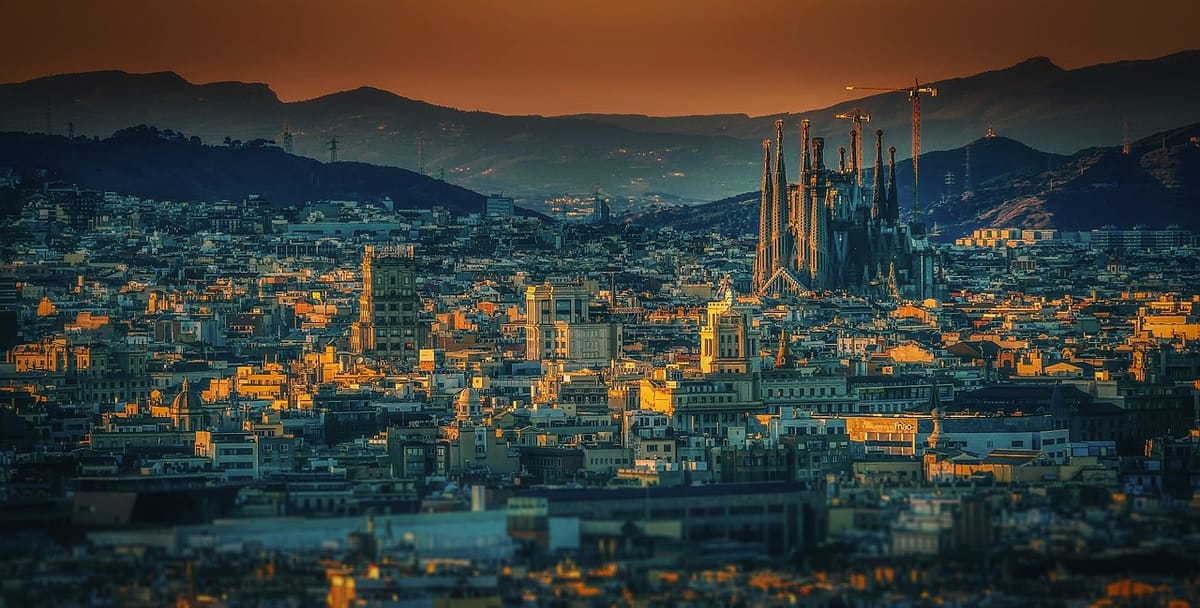
In Catalonia, just as there are many subsectors in industry, the type of tourism is very diverse throughout the country. There seems to be enough consensus that, in the city of Barcelona, the limits of tourist growth are being reached if a quality-based model with necessary public regulation is to be preserved. However, tourists in Barcelona are there for business, leisure, medical treatments, etc., and are present year-round. In the rest of the country, the tourism model is very different. In the Pyrenees, there is a marked high season in winter, highly dependent on the presence of snow; on the coast, the high season remains very marked in summer; and in the interior, rural tourism predominates, with reduced occupancy. Thus, in Catalonia, there are regions where tourism becomes the main economic activity, and real tourist growth does not show symptoms of excess; on the contrary. That is, when we talk about tourist overcrowding in Catalonia, we are mainly talking about the city of Barcelona, because the tourist reality in the rest of the country is completely different.
What tourism policies have been applied in Barcelona?
Just this year, 2026, it has been approved to establish a tourist tax equivalent to the one that has existed for many years in other major cities around the world. The mistake is applying the same tax model that suits Barcelona to the rest of the country’s areas, where tourism is not comparable to the city and where the effects can be counterproductive. Another policy applied in the city of Barcelona was a moratorium to prevent the construction of new hotels. The market quickly reacted with price increases, displacement of hotel supply to surrounding municipalities, and the emergence of new unregulated tourist accommodations in the city. In other words, in no case was the number of tourists in the city reduced. And with these foreseeable effects, at least careful regulation of tourist apartments was needed, which is only now beginning. But again, the same mistake is repeated: a regulation is developed to regulate tourist apartments based on the problems in the city of Barcelona and is applied to all of Catalonia, with negative effects in certain tourist areas where more tourism should be promoted throughout the year to stabilize and improve the economy.
The mistake is applying the same tax model that suits Barcelona to the rest of the country’s areas, where tourism is not comparable to the city and where the effects can be counterproductive.
In short, in Barcelona and Catalonia, there is a comparative advantage in tourism, and it is a source of wealth that must be preserved. However, experience and knowledge of the diversity of tourism models present throughout the country require the design of much more advanced and precise economic policy measures. Tourism has become a basic necessity, especially in Europe, and Catalonia must define a model with adequate public regulation for each tourist area to ensure that the activity is economically, socially, and environmentally sustainable.
(1) The Limits to Growth (Donella H. Meadows, Dennis L. Meadows)