Beyond Technology: Cybernetics and the Human Mirror
This article was written by Josep Forest
In 1948, Norbert Wiener defined cybernetics as the scientific study of control and communication in animals and machines. At the time, the definition seemed to build a theoretical bridge between two separate worlds. Today, however, that bridge no longer exists. The two worlds have become one. The boundary between the biological and the synthetic is blurring at a speed we can barely process.
From "Computers" to "Wearables"
Looking back to the 1970s, the human relationship with computing was distant. The machine was an alien entity, a massive object that occupied entire rooms and required complex protocols to interact with. It was a new, distant, and alien technology to the person.
Looking back to the 1970s, the human relationship with computing was distant.
Today, reality is radically different. We no longer "use" technology in the traditional sense of the word; we coexist with it in symbiosis. The mobile device is no longer a tool but an extension of our body. From the connected home to the autonomous car, including the watch that constantly monitors our heart rate, the digital environment has ceased to be optional.
All of this is nothing more than the natural evolution of humanity, which, unlike other species—condemned to slow biological adaptation or extinction in the face of environmental changes—has mastered niche construction (a function that a species develops in a given ecosystem). We do not wait for our bodies to change to survive; instead, we transform the planet to make it habitable (Niche Construction: The Neglected Process in Evolution - Odling-Smee, Laland & Feldman).
From video games to AI
How have we reached this dizzying leap in less than a generation? The transition from simple calculating machines to robots that jump, dance, and learn has not been a linear or fully planned path. At the heart of this revolution, we find what we might call a "historical accident."
What once served to move characters in a virtual environment now trains the neural networks that manage the real world.
The graphics card (GPU), a piece of hardware originally designed for the recreational task of rendering video games and painting pixels in real time, turned out to have the perfect architecture for massive neural computation. This graphical power was the catalyst that allowed the shift from video games to training complex artificial intelligence models. What once served to move characters in a virtual environment now trains the neural networks that manage the real world.
The Past Becomes Present in a "Flash"
This progress is the result of a silent chain of innovation that has connected decades of research. Some key dates and data that resonate:
- AI and Foundations: From Alan Turing's theories in 1950 to the official birth of the term with John McCarthy in 1956.
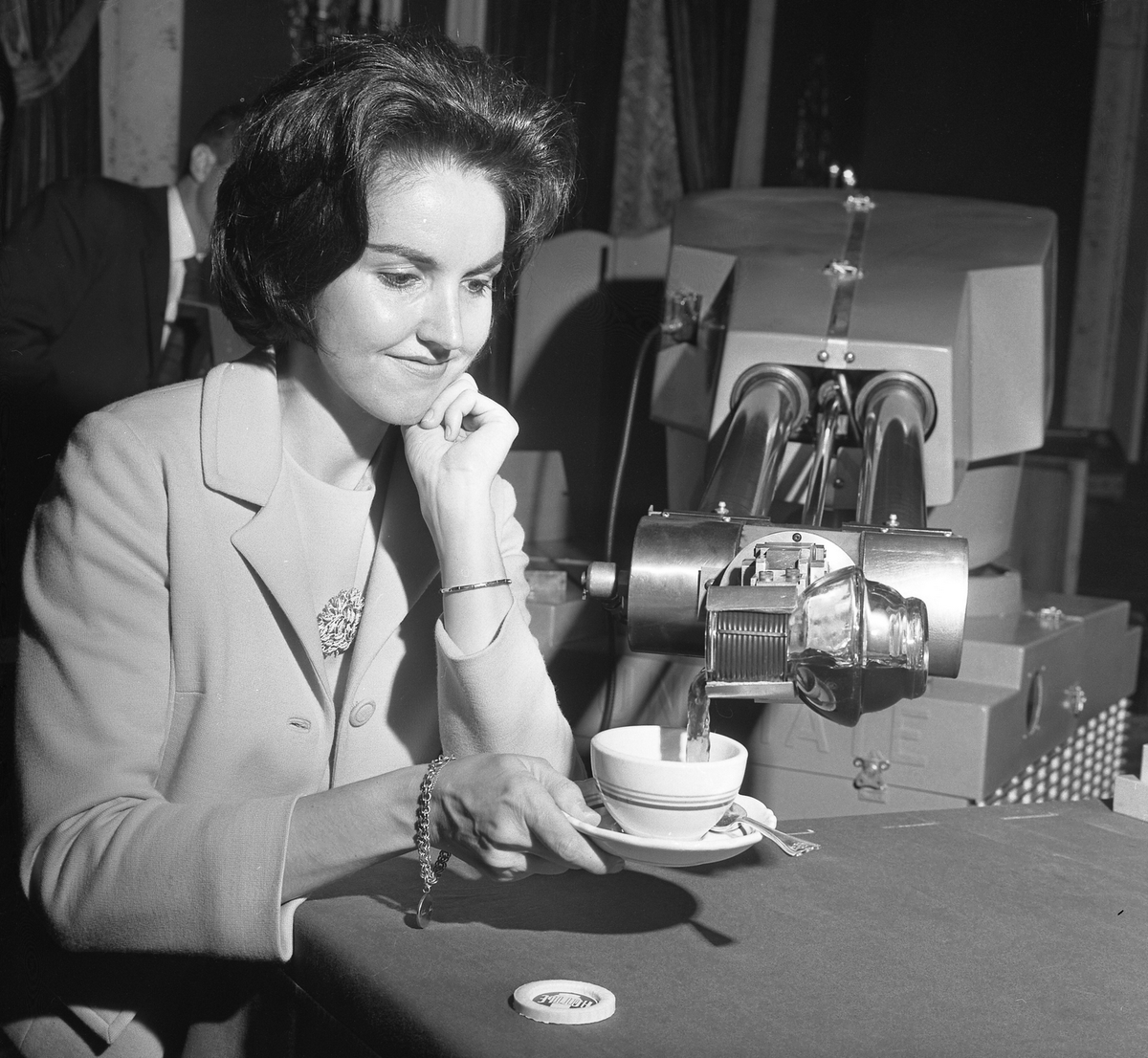
- Robotics: A concept coined by Isaac Asimov (1941) that took physical form with the Unimate, the first industrial robot, in 1954.
- Computer Vision: Initiated with Larry Roberts' thesis (1963) and Seymour Papert's famous "Summer Vision Project" in 1966.
All these leaps have occurred asynchronously until "today," when they have converged, propelling us into a new era.
Each leap has opened the door to the next: the joystick inspired interaction, the GPU provided the power, neural networks created the "digital brain," and humanoid robotics gave it a body to apply learned intelligence. All these leaps have occurred asynchronously until "today," when they have converged, propelling us into a new era.
Change of Focus
We have reached a point where symmetry is no longer a metaphor. We have created machines that see, move, and interact like us. Current robots recognize faces, interpret gestures, and navigate human spaces with a precision that often surpasses ours.
The question is no longer technical but profoundly philosophical.
This capability forces us to shift our focus from technology to ethics. If a machine can see, feel, learn, and act like a human being, what is the difference that truly matters? The question is no longer technical but profoundly philosophical. Where do we set the limit? Can we set any limit at all?
Beyond Philosophy...
According to data from the International Energy Agency, the electricity consumption directly attributable to some form of AI is currently 1.5% globally. Although this percentage may seem small, it corresponds to 415 TWh (terawatt-hours) annually. This represents more than the total electricity consumption of entire countries like Argentina or Sweden.
The data also show that AI-related consumption is increasing by 20% to 30% annually, and the increase is not linear; it is highly likely that this consumption follows an exponential relationship.
The data also show that AI-related consumption is increasing by 20% to 30% annually, and the increase is not linear; it is highly likely that this consumption follows an exponential relationship.
Clearly, this growth is a limiting factor that we will face long before humanity decides on the effective limitation or regulation of AI's boundaries. Are we approaching the paradox that Hampton Fancher and David Peoples brilliantly depicted in Blade Runner? Or will the planet's energy reality be a more pragmatic factor that self-regulates the massive deployment of AI in all its forms?
And if we look to the future of computing, which is likely to be quantum, will it solve the energy problem through orders of magnitude increase in computational efficiency? Not in the medium term, but when it arrives, perhaps we will have evolved enough to better understand the new paradigm... or not.
Conclusions: A Future to Decide
In conclusion, we must be clear on three fundamental ideas:
- Integration is Total: The fusion between humans and technology is not a promise of the future; it is our daily present.
- The Chain is Powerful but Organic: There has been no central planning. Each innovation has unlocked the next almost accidentally.
- The Responsibility is Ours: Technology does not have the capacity to decide its own limits. This is a task that falls to us as a society.
The answer we give today to the question about the limits of the machine will ultimately define what the world of tomorrow will be like.
Josep Forest
Josep Forest is co-founder of Opsis Vision Technologies and associate professor at the University of Girona (VICOROB group). Specialized in 3D vision and robotics, he merges research and teaching in visual processing technologies and digital systems.